
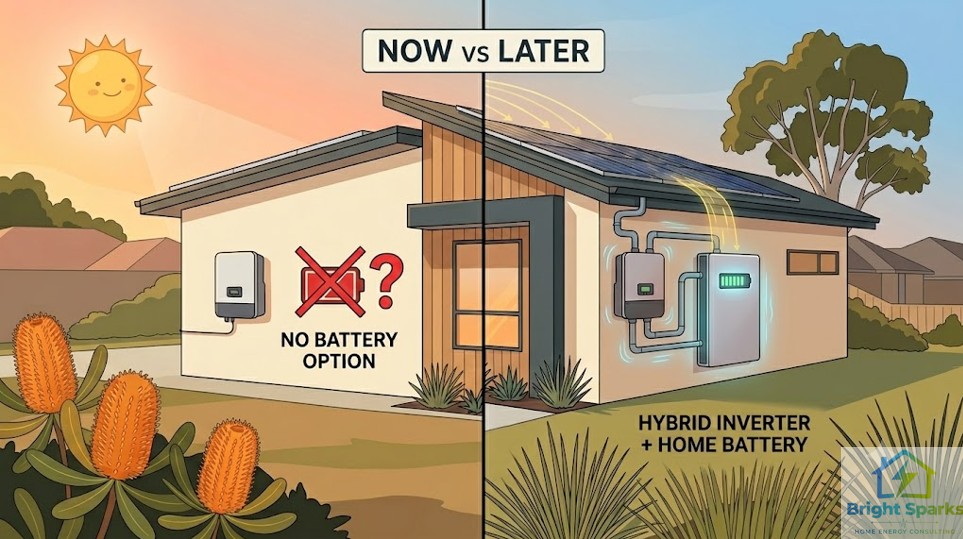
Hybrid or Standard Inverter? What Nobody Tells You Before You Get Solar
Hybrid or Standard Inverter? What Nobody Tells You Before You Get Solar
There’s a conversation that happens in home energy circles more than any other. It goes: “I got solar five years ago. Now I want to add a battery. Turns out my inverter isn’t compatible — going to cost me an extra $X to sort out.”
The installers who sold those systems didn’t raise the battery question. And the homeowners assumed the people quoting them had thought it through.
Most hadn’t.
If you own your roof, you will get a battery
Feed-in tariffs — what retailers pay for excess solar sent back to the grid — have fallen from around 20 cents per kWh a decade ago to 3–5 cents today. Some retailers are already at zero.
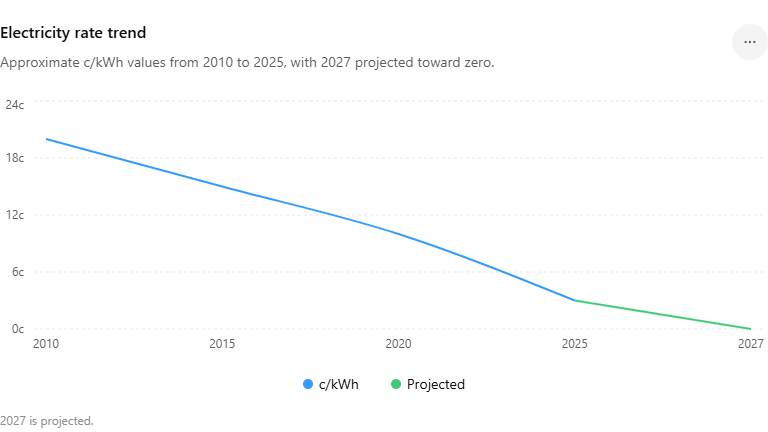
On top of that, networks are actively managing how much rooftop solar they’ll accept. In 2022, Western Australia introduced Emergency Solar Management — a scheme letting the network operator remotely switch off household systems during oversupply. Both WA and the east coast have since moved to smarter dynamic management, but the direction of travel is clear: households with batteries are favoured, because they consume their own generation rather than pushing surplus onto a congested grid.
The old pitch was “put solar on your roof and make money.” The new reality is “put solar on your roof and get a battery, or watch your investment underperform.”
If you own your home and have solar, a battery isn’t a maybe. It’s an eventually. The inverter you choose now either makes that easy or expensive.
Think of it like rainwater collection. Nobody plumbs a roof catchment system without a tank. But that’s exactly what solar without a battery path is.
The Scouts had a motto for this.
What does an inverter actually do?
Your solar panels produce DC electricity (direct current). Your house runs on AC (alternating current). The inverter is what converts one into the other. Without it, your panels are just expensive roof decoration.
A standard inverter does that job and nothing else. Solar in, AC out, done. There’s one practical consequence worth knowing: if the grid goes down, a standard inverter automatically shuts off for safety reasons. No grid, no solar — even on a clear day with panels producing flat out.
A hybrid inverter does that job and also manages a battery. It can charge the battery from your panels, draw from the battery when the sun goes down, and handle the handover between solar, battery, and grid — all in one box.
📋 What’s an MPPT? MPPT stands for Maximum Power Point Tracker. It’s the part of an inverter that constantly adjusts to squeeze the most power out of your panels under changing conditions — clouds, partial shade, different temperatures. A standard inverter has one or two MPPTs. Hybrid inverters often have more, and some have dedicated MPPT inputs for battery charging. If an installer mentions “dual MPPT” or “three MPPT inputs,” this is what they’re referring to. More terms like this in the Bright Sparks Dictionary.
So why doesn’t everyone just get a hybrid from the start?
Cost is the short answer. A hybrid inverter costs more upfront — often $800 to $1,500 more than a comparable standard inverter.
That premium made more sense to skip when batteries were $15,000 and the technology was immature. It makes a lot less sense now — when batteries are a near-certain future purchase for most solar households, and FiTs have made “I’ll just export the excess” a worse answer every year.
The installers who talked people out of hybrid inverters aren’t necessarily villains. They just weren’t thinking about your next purchase. You need to.
What happens if you get a standard inverter and then want a battery?
You still have options, but they get more complicated.
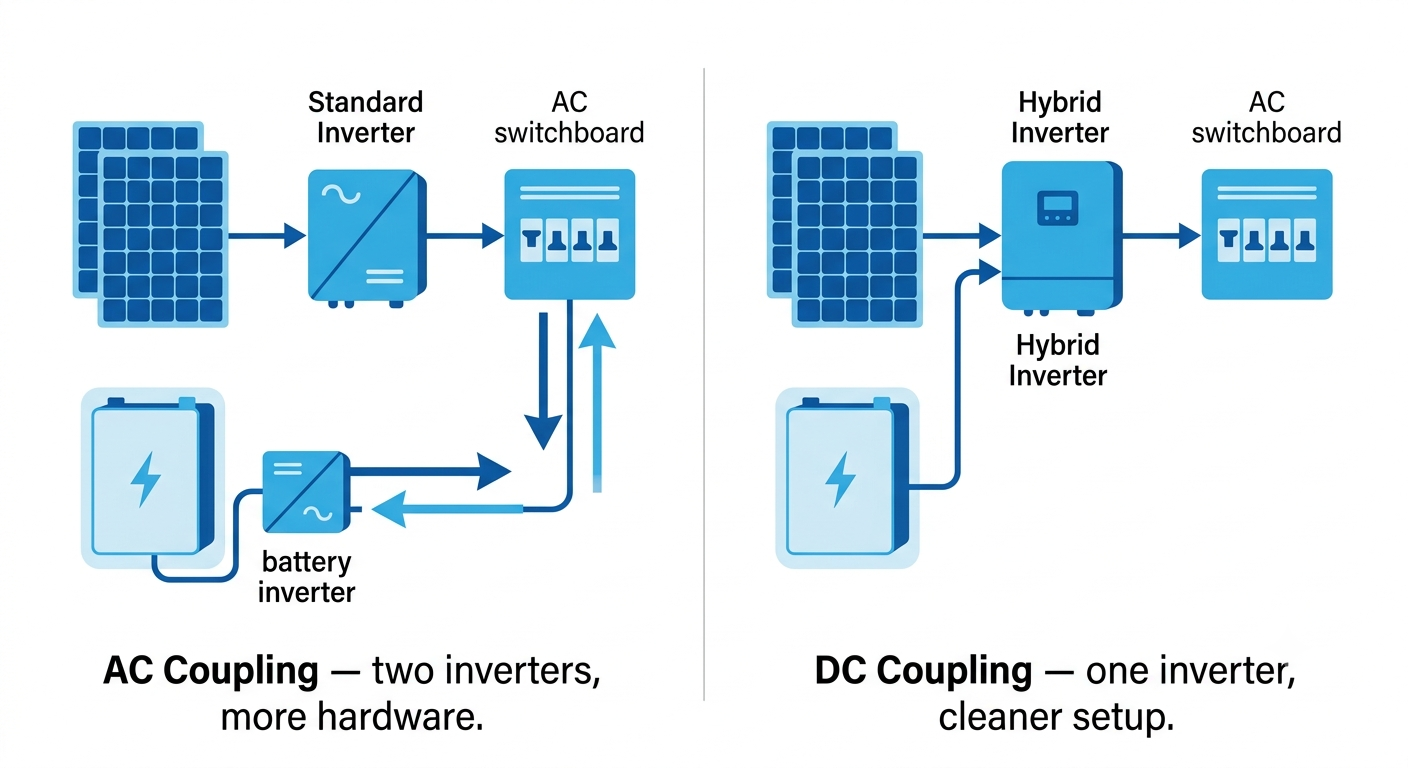
The main one is AC coupling. You add a separate battery inverter alongside your existing solar inverter. The battery charges and discharges via AC rather than DC. It works — but you’re now running two inverters instead of one, which adds cost, adds complexity, and (depending on your setup) can reduce efficiency slightly.
DC coupling, where the battery connects directly on the DC side before the inverter, requires either a hybrid inverter or a dedicated battery inverter with DC inputs. If you’ve got a standard inverter, DC coupling generally isn’t possible without replacing it. There’s also a trade-off with DC coupling worth knowing: you’re often locked into a specific brand ecosystem. The hybrid inverter dictates which batteries are compatible, so if you later want a different battery brand, your options may be limited.
📋 What’s AC vs DC coupling? This refers to where in your system the battery connects. DC coupling connects the battery before the inverter (on the solar panel side), which is slightly more efficient because the electricity doesn’t get converted twice. AC coupling connects the battery after the inverter (on the household side), which means the energy gets converted from DC to AC and then back to DC to charge the battery. DC coupling needs a hybrid inverter. AC coupling can work with an existing standard inverter, but you’ll need an additional battery inverter. Both work fine — DC coupling is just a bit cleaner. Full entry in the Bright Sparks Dictionary.
The battery-ready principle
Even if you’re not buying a battery today, make sure your installer doesn’t install your solar like batteries don’t exist.
That means:
1. At minimum, get a hybrid inverter if you think you’ll want a battery within five years. The upfront premium is almost always cheaper than the retrofit cost later.
2. If you’re genuinely comfortable with a standard inverter, make sure the quote at least accounts for future AC coupling. Ask: “If I want to add a battery in three years, what will that look like?” Watch their face. A good installer has a clear answer. A salesperson pivots.
3. Check the inverter’s battery compatibility list. Hybrid inverters are not universally compatible with all batteries. If you have a preference (Powerwall, BYD, Alpha ESS, Sungrow), confirm upfront that the inverter supports it. And if an installer is pushing you toward three-phase specifically to support a battery system, read this first — most residential battery systems work fine on single phase.
4. Make sure the switchboard can handle it. This isn’t an inverter issue per se, but it often comes up at battery installation time. If your switchboard is old, ask now rather than later.
If you’re in the ACT, the current rebate and interest-free loan structure also affects which system size makes sense — worth reading this before you finalise anything.
The brand question
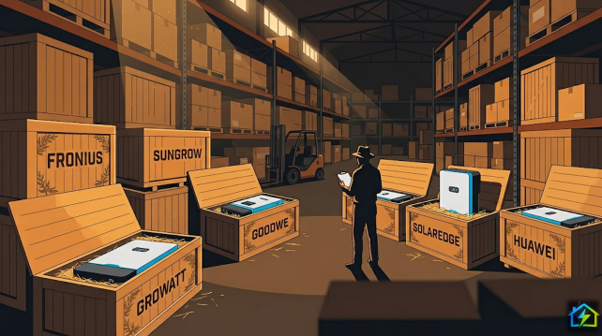
Plenty of solid hybrid inverters are available in Australia. Fronius, SolarEdge, Sungrow, GoodWe, Growatt, and Huawei all have hybrid options used widely. Prices and feature sets vary.
One practical sizing advantage worth knowing: some hybrid inverters allow you to pair significantly more panel capacity than a standard inverter would. Where a standard setup caps the panel array at roughly 133% of the inverter’s rated capacity, some hybrids allow up to 200%. The excess generation that would otherwise be lost gets directed into the battery instead. If you’re planning a larger system, ask your installer what the oversizing limits are for the specific hybrid they’re quoting. Solar size and battery size are more interlinked than most quotes make clear — the Photon Rain and Energy Tanks post covers that relationship in detail.
A few things worth checking regardless of brand:
- Warranty length and what it covers. Five years is common; ten years is better. Check whether the warranty covers parts only or parts and labour.
- Local support. If the inverter plays up, can someone actually fix it in Australia, or does it sit on a ship for three months? Some brands are better than others here.
- App and monitoring quality. You’ll probably look at your inverter’s data more than you expect. Some apps are genuinely good. Others are an exercise in frustration.
A note on microinverters and optimisers
Microinverters (like Enphase) and DC optimisers (like SolarEdge) are a different architecture entirely. Each panel gets its own small inverter or optimiser rather than running to a central box. They have real advantages — particularly on roofs with partial shading or odd orientations.
Battery storage with microinverter systems works via AC coupling and requires a compatible battery system. Enphase has its own battery (IQ Battery) designed to work with their microinverters. Other combinations are possible but add complexity.
If you’re being quoted a microinverter system, make sure you specifically ask how battery storage would work with that setup — and what it would cost.
A few things to watch for when getting quotes
Inverter quotes come with their own set of traps. A few specific ones:
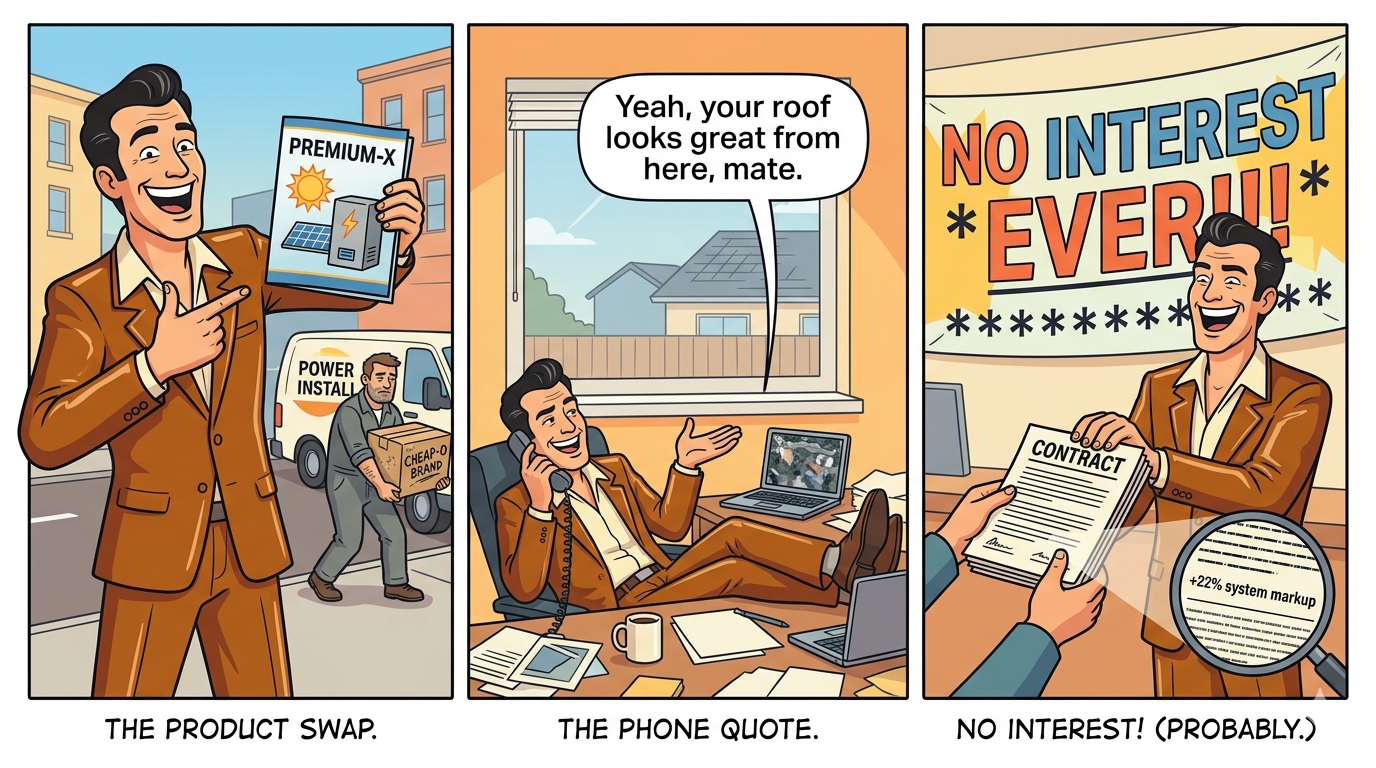
- The product swap. You’re quoted on a reputable brand, you sign, and a different (cheaper) brand turns up on install day. Always confirm in writing exactly which make and model is being installed, and check it when the installer arrives.
- Quotes without a site visit. Some installers quote entirely off satellite imagery. That’s fine for a ballpark, but a proper quote for installation should involve someone actually looking at your roof, your switchboard, and where the inverter will go. Surprises discovered on install day tend to cost you money.
- “No interest” finance. The interest has to come from somewhere. These deals often have a 15–25% markup baked into the system price to cover the financier’s cut. Compare the financed price to a cash price from another installer before you decide it’s a good deal.
The short version
- Standard inverter: cheaper now, more complicated later if you want a battery.
- Hybrid inverter: costs a bit more now, makes batteries much simpler later.
- If there’s any realistic chance you’ll want a battery in the next five years, lean hybrid.
- If you’re getting a standard inverter, at least confirm the AC coupling path — and get it in writing. The goal isn’t to spend more than you need to. The goal is to not spend more than you need to twice.
Got a solar quote and not sure what type of inverter it includes? That’s exactly the kind of thing a Bright Sparks quote review covers. Flat fee, no commissions, no agenda.
Want personalised advice?
Get a free energy review tailored to your home — no products, no commissions.
Get free review